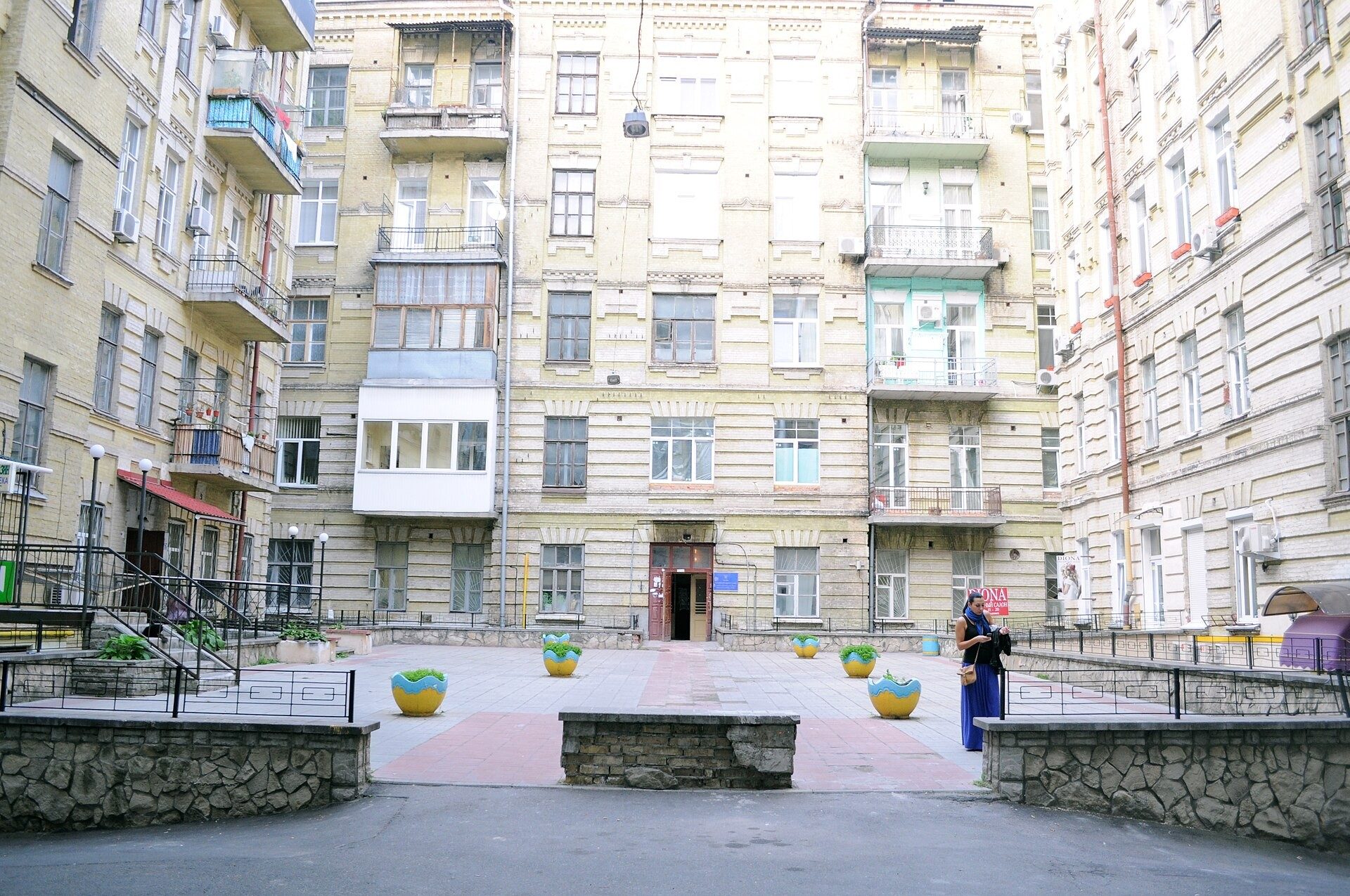
Darnytskyi sits on Kyiv's eastern edge, long defined by heavy plants that once turned out machinery, chemicals, and construction materials. After years of war damage and economic reorientation, those same parcels are moving into residential use. The darnytskyi industrial residential shift now shapes local housing supply, buyer choices, and municipal planning priorities for people who want stable addresses close to the capital's employment centers.
From Steelworks to Living Spaces in Darnytskyi
Large factory compounds occupy land that is flat, already connected to power grids, and near existing roads. Once production stopped or shrank, owners and city officials began studying residential potential. Clearance of collapsed roofs and scrap metal created open pads ready for apartment blocks and mid-rise courtyards. Early projects replace single-use industrial footprints with mixed streets that include ground-floor shops and shared green areas. Residents gain shorter commutes while the district sheds its image as a pure production zone. Planners track floor-area ratios carefully so that new homes do not overwhelm remaining light manufacturing that still employs local workers.
Polluted Ground Versus Livable Neighborhood Goals
Decades of industrial activity left heavy metals and solvents in the soil. Before any foundation can be poured, specialists sample the earth, map contamination plumes, and design remediation layers. In some cases clean soil is brought in; in others, engineered caps seal residual risks. The cost of these steps can equal a sizable share of total project budgets, yet skipping them risks later health claims and stalled sales. Municipal inspectors now require certified clean-up reports before issuing residential construction permits. Buyers who understand this sequence look for developers who publish independent lab results rather than marketing gloss alone.
Legal Pathways for Industrial Land Conversion
Changing a site from industrial to residential zoning involves public hearings, environmental impact statements, and updates to the city's master plan. Owners submit detailed applications that show how utilities, schools, and emergency services will serve the added population. Opposition sometimes arises from neighbors who fear traffic or from remaining factories worried about noise complaints. Successful applicants often propose phased redevelopment that keeps a portion of the land for workshops or logistics while the rest becomes housing. Once rezoning is approved, title work and mortgage eligibility improve, unlocking bank finance that pure industrial land rarely attracts.
Developers also consult the FAQ (frequently asked questions) section for standard documentation lists so that applications avoid common omissions. Local councils have shortened review windows for sites already cleared of active hazardous operations, accelerating the first wave of conversions.
Who Buys Homes Built on Former Plant Footprints
Young families priced out of central Kyiv districts form the largest buyer group. They value modern layouts, parking, and playgrounds that older stock rarely offers. Returning residents who left during active fighting look for new builds that feel secure and energy-efficient. Investors purchase units for rental to workers employed in the capital's service and tech sectors. Price points remain lower than Pechersk or Holosiivskyi, creating a value proposition that balances commute time against living space. Marketing materials emphasize proximity to the metro and the Dnipro riverfront rather than any lingering industrial heritage.
Market watchers compare these dynamics with broader capital trends in the Kyiv Real Estate Market Outlook for 2026 to judge absorption rates. Early sales data suggest absorption is fastest for projects that finished remediation before marketing began.
Capital Sources Fueling the Residential Wave
Domestic banks remain cautious after war-related losses, so many projects blend equity, municipal guarantees, and external credit lines. The National Bank of Ukraine sets prudential rules that shape how much developers can borrow against future sales. Multilateral partners fill gaps: the World Bank Ukraine country program supports infrastructure upgrades that make residential density feasible, while the IMF Ukraine country analysis influences overall fiscal space for housing guarantees. The EBRD Ukraine program has backed selected brownfield-to-residential schemes that meet energy-efficiency thresholds. Together these channels reduce the equity burden on local firms and bring international standards for transparency.
Private equity funds also enter when land titles are clean and sales pre-commitments exceed thirty percent of units. Interest rates still reflect wartime risk premiums, yet long-term fixed products are reappearing for buyers who can document stable income.
Utility Networks Supporting Higher Population Loads
Factories once drew high volumes of electricity and process water, yet their internal networks rarely match residential distribution patterns. Water mains must be resized, sewage capacity expanded, and fiber-optic lines extended into courtyards. District heating connections require modern metering so that apartment owners pay only for actual use. Power substations need transformers rated for simultaneous evening peaks rather than continuous industrial draw. Projects that coordinate these upgrades with municipal utilities avoid later blackouts and water shortages that erode buyer confidence.
Reconstruction sequencing favors corridors where such works can be shared among several sites. Readers interested in broader recovery patterns can study Why Prime Corridors Recover First in a Reconstruction Cycle for parallels across Kyiv.
Balancing Density With Community Needs
High-rise towers maximize land value but strain kindergartens, clinics, and parks. Successful schemes therefore include mid-rise buildings, pocket parks, and ground-floor spaces reserved for medical or educational use. Community input sessions help identify missing services before final design freezes. Some developers set aside units at controlled prices for teachers and medical staff, easing the social mix. Noise barriers and green buffers separate remaining light industry from residential courtyards so that both functions can coexist without conflict.
Cost and speed trade-offs differ by district; the analysis in Comparing Kyiv's Corridors on Rehab Cost Versus Recovery Speed helps place Darnytskyi relative to other conversion zones. Local advocacy groups monitor delivery of promised amenities and publish scorecards that influence later phases.
Signs That the Shift Is Taking Hold
Cranes now outnumber smokestacks on several large sites. Building permits for residential square meters have overtaken industrial permits for three consecutive reporting periods. School enrollment requests from new addresses are rising, and grocery chains have opened larger formats to serve denser populations. Land prices for cleared industrial parcels have climbed faster than city averages, reflecting residential highest-and-best-use valuations. Municipal tax revenue from property and personal income is beginning to offset the loss of industrial payroll taxes.
For ongoing coverage of similar district transformations, the Market Trends archive collects earlier case studies, while the Blog features resident interviews and site-visit notes. Anyone seeking structured tools for evaluating similar shifts can explore the Foundation platform for data dashboards and planning frameworks tailored to Ukrainian reconstruction contexts.
The darnytskyi industrial residential shift remains unfinished. Yet the combination of cleaned land, new capital channels, and clear buyer demand has already rewritten the district's economic map. Careful sequencing of remediation, zoning, and utilities will decide whether the next decade produces vibrant neighborhoods or stalled half-built shells.
Readers comparing notes on Darnytskyi s Industrial to Residential Shift Post War in Ukraine should keep one dated source list and one named owner for updates so the next review of Darnytskyi s Industrial to Residential Shift Post War does not restart definitions. Article reference ukraine-064.
If two teams disagree about Darnytskyi s Industrial to Residential Shift Post War, write the disagreement in one paragraph with the evidence each side trusts before any money language expands around Darnytskyi s Industrial to Residential Shift Post War. Article reference ukraine-064.
Related Foundation reading: Foundation Israel and Cross Border Legal Advisory Networks: Public Consultation Themes.
Timeless Value. Perpetual Legacy.