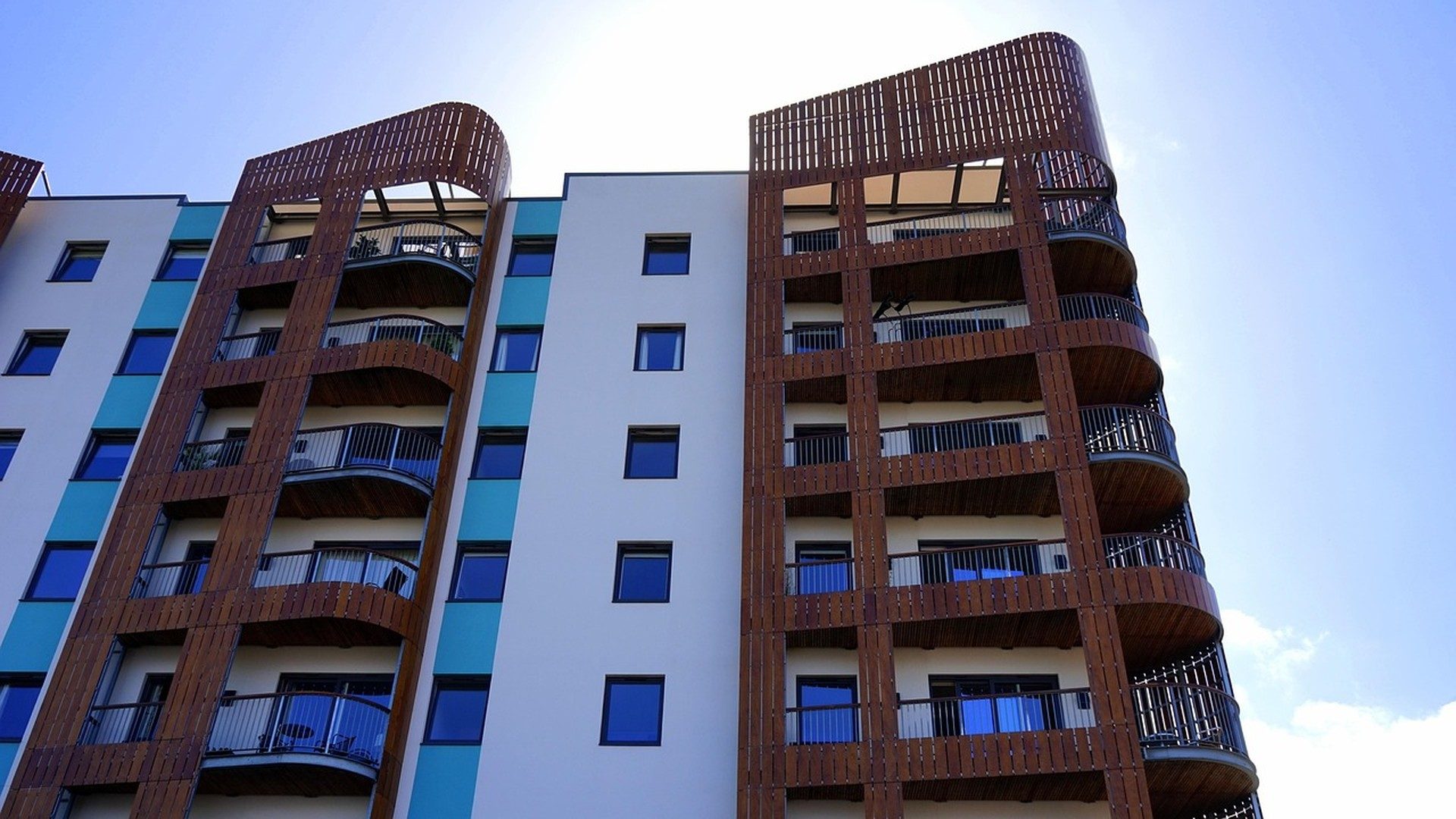
Mixed-use towers that stack shops, offices, and apartments in one vertical frame now dominate reconstruction plans across Ukrainian cities. Execution risk sits at the center of every such scheme: the chance that the build finishes late, over budget, or unfinished in key layers. For private investors and municipal partners alike, that risk turns into empty floors, stalled loans, and public frustration. This article walks through the concrete forms the risk takes on Ukrainian sites and the practical controls that keep towers moving toward occupancy.
Layering Shops Under Homes Creates Distinct Build Risks
Placing retail podiums beneath residential towers multiplies interfaces. Delivery trucks need ramps while residents require quiet cores. Plumbers must thread commercial grease interceptors around apartment risers. When these systems clash, crews halt, redesign, and rework. In Kharkiv and Odesa the same pattern appears: a completed shell still cannot open because the ground-floor kitchen exhausts interfere with upper-floor fire stairs. Early three-dimensional clash detection run by an independent engineer reduces rework hours by more than half. Owners who skip that step later face months of remedial cutting inside finished concrete.
Tracking Progress Markers Floor by Floor in Kyiv Towers
Traditional percentage-complete reports hide trouble. A better method assigns hard milestones to every level: structural pour, facade seal, mechanical rough-in, and fit-out ready. Weekly photographs and laser scans uploaded to a shared dashboard show whether a floor is truly closed. When markers slip, the owner triggers contingency clauses before the delay climbs higher. Teams that rely on verbal updates alone discover shortfalls only when the crane is already booked for the next pour. The A Contractor Vetting Checklist for Multi-Layer Tower Projects supplies questions that force bidders to prove they already use this floor-level discipline.
Supply Chain Breaks That Freeze Elevator and Facade Work
Elevator cars and unitized glass panels travel long distances and rarely have local substitutes. A single blocked border crossing or port congestion can idle an entire shaft for weeks. Ukrainian projects after 2022 learned to dual-source critical packages: one European fabricator and one domestic backup capable of simpler assemblies. Stocking two spare elevator machines on site costs little compared with idle tower cranes. The EBRD Ukraine program has financed several logistics corridors that shorten lead times for certified components; owners who pre-qualify under those corridors gain priority access when shortages hit.
Aligning Tenant Fit-Outs With Core Structure Completion
Commercial tenants often demand custom layouts long before the residential floors above them receive drywall. If the core schedule drifts, the retail fit-out either waits or proceeds at risk of later demolition. A binding interface agreement signed at contract award sets freeze dates for shaft locations, floor loadings, and power capacity. After those dates, changes cost the party that requests them. Residential buyers receive the same clarity through staged hand-over calendars. Projects that treat fit-out as an afterthought routinely finish with empty shop fronts while apartments above already house families.
Insurance Gaps Specific to Hybrid Tower Sites
Standard construction all-risk policies cover pure residential or pure commercial shells more cleanly than mixed-use frames. Insurers price the hybrid risk higher because a fire or water leak can migrate between occupancy types. Adding specific clauses for common lobbies, shared generators, and dual-use parking reduces coverage disputes later. Premiums rise, yet the alternative is self-funding a claim that courts may reject. The Ukraine recovery portal lists approved insurers who already underwrite reconstruction towers; comparing their hybrid wording early prevents gaps.
Partner Roles That Shift Responsibility for Delays
Developers, general contractors, and municipal utility providers each own different delay drivers. Clear matrixes written into the construction contract assign weather risk to the contractor, design-change risk to the developer, and connection-date risk to the city. Without that matrix every delay becomes a blame contest. Monthly risk-review meetings chaired by an independent project monitor keep the matrix alive. When a party fails its obligation, liquidated damages flow automatically rather than through litigation. Investors who review the Smart Strategies archive find repeated case studies where weak role definitions turned minor slips into multi-year freezes.
Early Warning Signals Before a Project Loses Momentum
Three simple indicators appear weeks before a tower stalls. First, the weekly concrete pour volume drops below the planned cubic meters for two consecutive weeks. Second, the number of open requests for information from the design team exceeds the prior month’s average by 30 percent. Third, subcontractor manpower on site falls short of the staffing curve by more than 15 percent. Any one signal alone may be noise; two together demand immediate owner intervention. Owners who ignore them later discover that financing covenants have already been breached. The National Bank of Ukraine tracks construction lending covenants closely and expects early disclosure of such signals.
Recovery Tactics After a Mid-Height Stoppage
Even well-run projects can face sudden work stoppages caused by air-raid alerts, material embargoes, or contractor insolvency. Pre-agreed recovery playbooks keep the structure weather-tight and the site secure within 48 hours. Temporary roof membranes, dehumidifiers, and 24-hour security prevent progressive damage. Parallel legal work packages prepare for contractor replacement or force-majeure claims so that restart decisions are not delayed by paperwork. Capital for restart often comes from reconstruction funds; securing an introduction through Off-Market Sourcing Through Reconstruction Fund Intermediaries shortens that path. Teams that treat recovery as an afterthought lose another season to winter weather.
Financing structures themselves can either absorb or amplify execution risk. Bridge facilities sized only for the base schedule leave no room for the three-to-six-month overruns common on mixed-use frames. Owners who build an explicit contingency tranche released against verified milestones maintain liquidity without renegotiating entire facilities. The World Bank Ukraine country program has supported several such layered facilities for urban towers; their public term sheets illustrate how contingency drawdowns are controlled. Parallel equity partners sometimes prefer the phased approach of The BRRRR Method Adapted for Post-War Kyiv Real Estate, recycling capital from completed lower floors into upper-floor completion. Both routes work provided the underlying construction controls stay rigorous.
Non-experts can still influence outcomes by asking five plain questions at every progress meeting: Which floor is closed this week? What package sits on the critical path tomorrow? How many change orders remain open? Which insurance claim is unresolved? What contingency cash remains unused? The answers reveal more than glossy slides. Readers seeking deeper operational detail can browse the Blog for site diaries or consult the FAQ (frequently asked questions) for definitions of common contract terms. Full access to tools and partner networks lives on the Foundation platform, where Ukrainian project teams share real-time risk dashboards and lessons from towers already occupied.
Execution risk never disappears; it is only transferred, reduced, or absorbed. Mixed-use towers in Ukraine carry that risk in sharper form because they combine living space with commerce under one roof and under wartime logistics. Owners who map every interface, mark every floor, dual-source every long-lead package, and rehearse recovery steps convert the same risk into a manageable cost of doing business. Those who treat the tower as a simple stack of floors learn the hard way that one stalled elevator can empty an entire investment.
Related Foundation reading: Drone Mapping for Reconstruction Planning: A Beginner's Institutional .
Timeless Value. Perpetual Legacy.