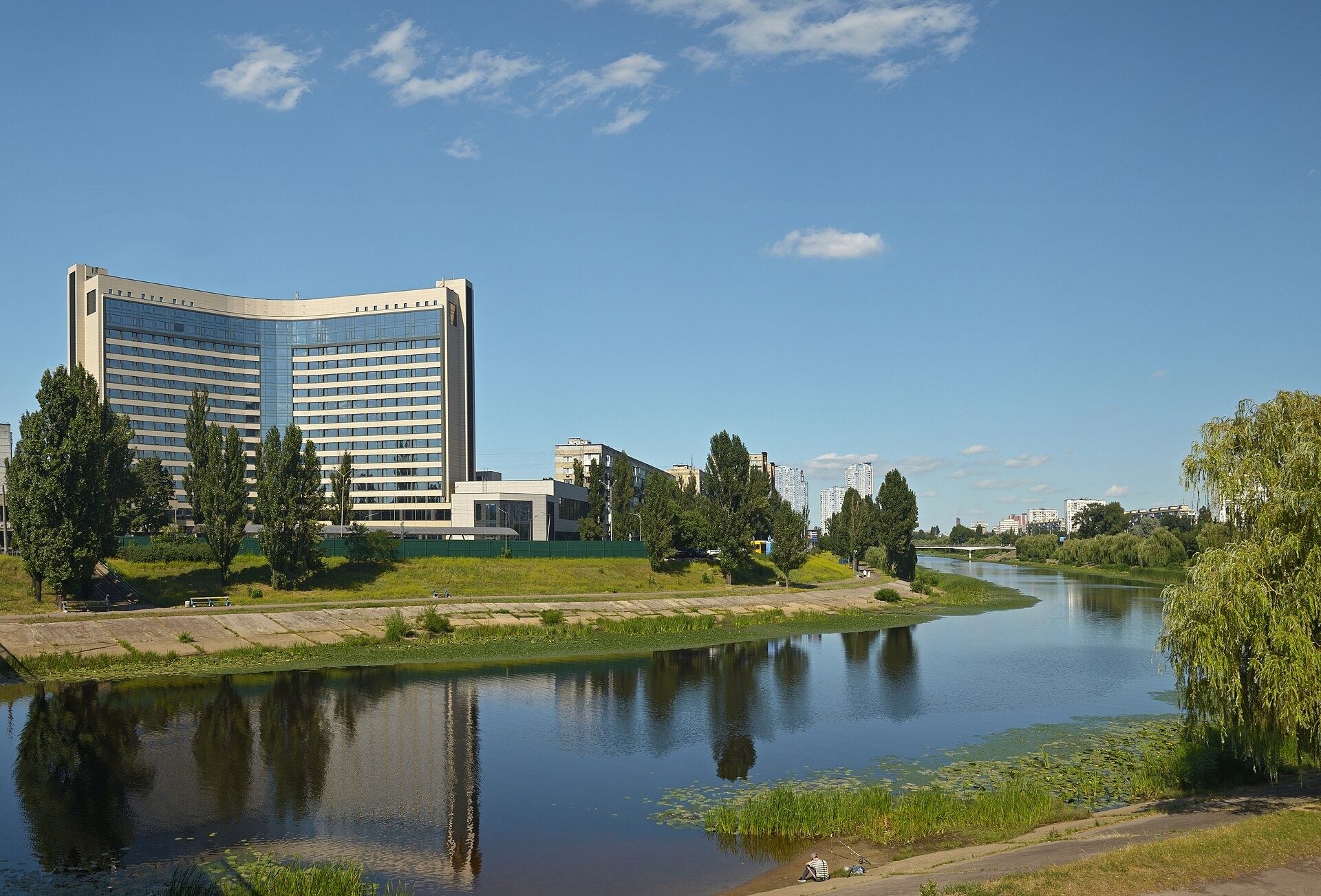
Post-war tower rehabilitation across Ukraine places reinforced concrete standards at the center of every decision that decides whether a damaged high-rise becomes a safe home again or remains a hazard. Engineers, owners, and city officials now face frames that absorbed shock waves, fire, and years of exposure, so the rules that govern new pours and splices must protect both people and the long investment cycles that follow.
Soviet Frames Meet Modern Load Paths
Many residential towers still standing in Kyiv, Kharkiv, and Odesa were built under design codes that assumed different wind maps and lighter live loads than today. Reinforced concrete standards now require that any rehabilitation recalculate those load paths with current seismic and blast residual factors. Existing columns often lack the confinement steel that later codes demand, so new jackets or fiber wraps must restore ductility without adding so much stiffness that adjacent beams crack. Field teams measure residual concrete strength with cores and rebound hammers, then decide whether the original bars can still carry tension once cleaned and coated. The goal is a hybrid system that respects the original geometry while satisfying the higher safety margins Ukrainian authorities now enforce for multi-story residential use.
Concrete Mixes That Resist Freeze-Thaw After Damage
Damaged towers often sit open to weather for months, so water saturates the cover and freezes. Current reinforced concrete standards call for mixes with lower water-cement ratios, air entrainment, and supplementary cementitious materials that reduce permeability. Local plants must supply batches whose 28-day compressive strength exceeds the design value by a clear margin, because early strength gain also shortens the period when temporary shores occupy the site. Admixtures that improve workability without excess water help crews place dense concrete around congested rebar cages in confined elevator cores. Specifiers also demand chloride limits low enough to protect both old and new steel against the de-icing salts used on Ukrainian streets. Documentation of every truck ticket and lab cylinder becomes part of the permanent record that later inspectors review before issuing occupancy certificates.
Investors who later apply The BRRRR Method Adapted for Post-War Kyiv Real Estate find that clean compliance files accelerate the refinance step once tenants return.
Rebar Continuity Across Blast-Torn Joints
Blast and fire frequently sever longitudinal bars at beam-column joints. Reinforced concrete standards insist that new bars develop full tension capacity through mechanical couplers or long lap splices placed outside the plastic hinge zones. Welding is allowed only under strict prequalification because residual heat can embrittle the old steel. Cover concrete must be restored to at least the thickness required by exposure class XC4 or XF3, depending on the façade orientation. Corrosion inhibitors applied to cleaned surfaces slow future rust, yet they never replace the need for adequate cover. Detail drawings show exactly where new stirrups close the confinement gaps that older Soviet detailing omitted. Once the cages are inspected, the pour sequence proceeds floor by floor so that each lift can cure under controlled temperature and moisture.
Coupler Qualification on Site
Every coupler brand must pass tensile tests that fracture the bar rather than the connection. Site laboratories keep sample results for the municipal archive and for any lender that later audits the project.
Non-Destructive Testing That Guides Repair Maps
Before any jacketing begins, teams scan slabs and walls with ground-penetrating radar and ultrasonic pulse velocity to map voids, delamination, and residual bar locations. Reinforced concrete standards treat these maps as the baseline against which repair success is measured. Core samples taken from low-stress zones calibrate the non-destructive readings so that strength estimates stay within accepted scatter. Where fire has reduced strength below 50 percent of design, removal and replacement become safer than partial patching. Infrared cameras reveal moisture pockets that would otherwise trap vapor behind new overlays. All results feed a digital model that contractors use to order materials only for the zones that truly need intervention, reducing both cost and construction traffic in dense urban blocks.
Project teams that study A Contractor Vetting Checklist for Multi-Layer Tower Projects gain a clearer sense of which firms already own the right testing gear and trained operators.
Fire and Residual Heat Effects on Steel Yield
Temperatures above 300 degrees Celsius permanently lower the yield strength of reinforcement. Codes require that engineers either replace the affected bars or reduce the allowable stresses in design calculations. Color charts and hardness tests help field crews decide which bars survived and which must be cut out. New concrete that encases the remaining steel must also provide the fire resistance rating mandated for the building’s height class, often two or three hours for escape routes. Intumescent coatings on exposed steel connectors add another layer of protection without increasing member size. These measures keep the tower within the fire-safety envelope that Ukrainian state inspectors enforce before reopening elevators and stair cores to the public.
Funding Conditions Tied to Code Compliance
International lenders and Ukrainian reconstruction funds link disbursements to verified adherence to reinforced concrete standards. The EBRD Ukraine program and the World Bank Ukraine country program both list structural safety milestones that must be certified by independent engineers before the next tranche arrives. Domestic banks follow guidance from the National Bank of Ukraine when they underwrite construction loans, so incomplete testing files can freeze cash flow for months. The official Ukraine recovery portal publishes the latest technical annexes that align national norms with European practice, giving owners a single reference point. Teams that keep digital records of every pour, test, and inspection therefore protect both safety and liquidity.
Owners who also explore Building a Deal Pipeline Through Local Broker Networks discover that brokers prefer buildings whose structural files already satisfy these lenders.
Training Crews for Consistent Placement Quality
Even the best specification fails if the placing crew vibrates poorly or leaves cold joints. Daily toolbox talks review the exact cover dimensions, bar spacing, and consolidation methods required by reinforced concrete standards. Supervisors use simple go/no-go gauges to check cover before the formwork closes. Sample cubes are cast beside the pour and cured under the same conditions so that laboratory strength truly represents the in-place concrete. When weather turns cold, heated enclosures and insulated blankets keep the concrete above the minimum curing temperature. These habits spread across the many floors of a tower and reduce the costly call-backs that appear months later as honeycombing or map cracking.
Further reading on related reconstruction tactics sits inside the Smart Strategies archive and the wider Blog maintained by Foundation.
Readers who still hold practical questions after studying the above can turn to the FAQ (frequently asked questions) section or explore the broader Foundation platform for additional regional resources.
In every rehabilitated tower the quiet presence of correctly detailed reinforcement and durable concrete becomes the invisible guarantee that families can sleep safely while the city itself regains its skyline. Reinforced concrete standards are not paperwork; they are the shared language that lets engineers, funders, and residents trust the same structure for decades ahead.
Readers comparing notes on Reinforced Concrete Standards for Post War Tower in Ukraine should keep one dated source list and one named owner for updates so the next review of Reinforced Concrete Standards for Post War Tower does not restart definitions. Article reference ukraine-082.
Related Foundation reading: Foundation Israel and Rail Logistics Tracking Technology: Key Terms and Concepts.
Timeless Value. Perpetual Legacy.