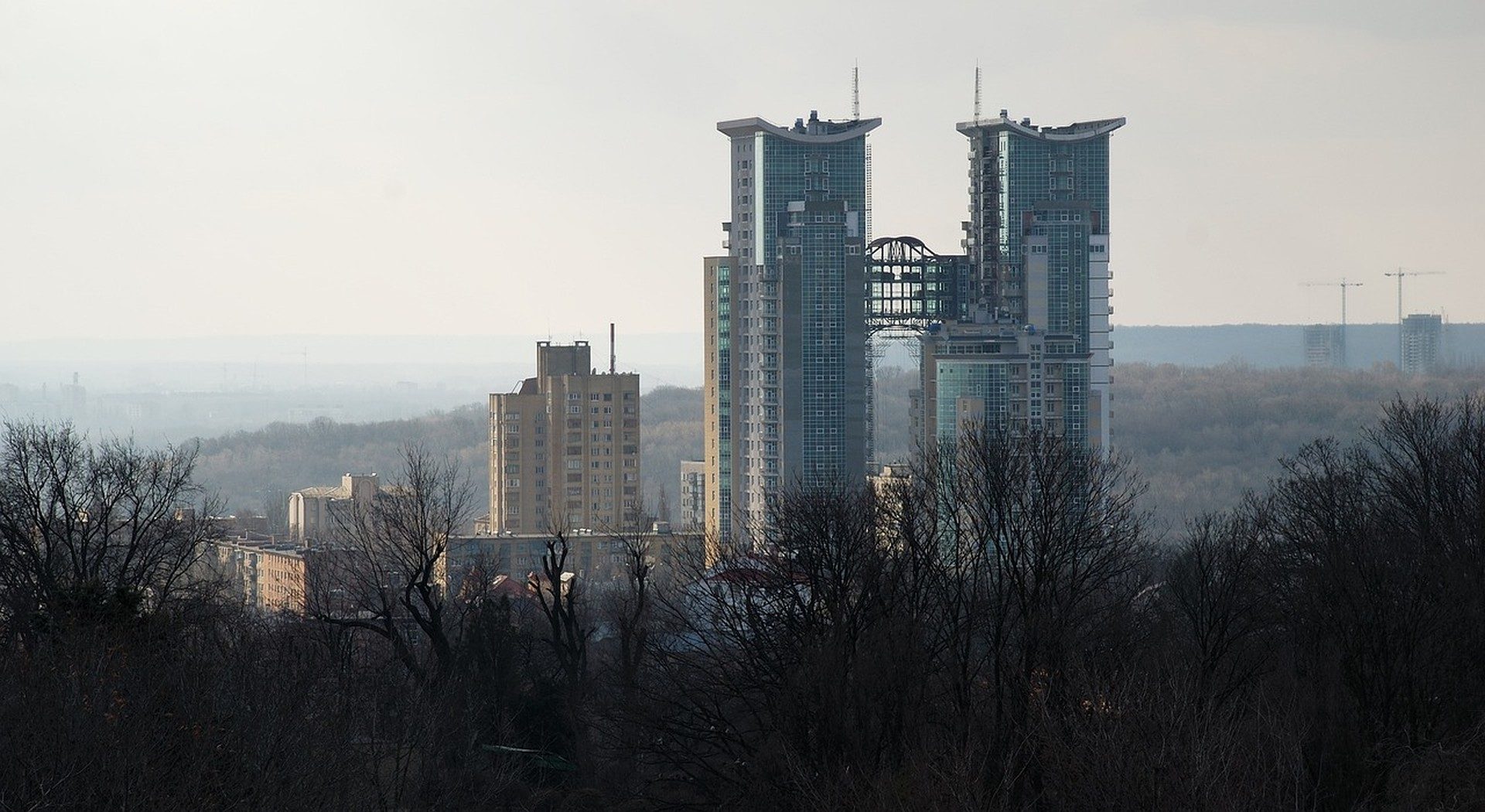
Buying a four-layer tower in Ukraine is never a single checklist. The structure stacks residential flats, commercial pods, service floors, and rooftop plant rooms into one legal and physical object. Due diligence four-layer tower work therefore splits every question into vertical slices so no hidden claim or defect remains buried under another layer.
Ownership Strata and Title Horizons
Ukrainian land and building registers treat each floor group as a distinct plot of rights even when the outer walls look continuous. Reviewers begin by extracting the primary cadastral extract for the land parcel, then pull every subsequent sale or mortgage that touches the ground floor retail slab. Mid-level apartments often carry separate condominium registrations; their ownership history must match the original developer's assignment schedule. The uppermost mechanical floor may still sit under a residual developer interest, especially if wartime interruptions delayed final commissioning. Cross-checking these records against notarial archives prevents one slice from claiming easements over another after the deed is signed.
Foreign buyers sometimes assume a single clean title certificate ends the search. In practice the certificate lists only the current registered owner of the whole volume; subordinate leases and service contracts remain invisible until secondary filings are opened. Teams that skip this step later discover a long-term restaurant lease that blocks planned reconfiguration of the lobby. The Cross-Border Investors and the Question of Exit Timing note shows how residual layer claims delay resale by months. Matching each layer's chain to the master certificate closes the gap before capital is committed.
Engineering Portfolios by Vertical Segment
Visual walks alone cannot certify a multi-use tower. Load-bearing columns that serve ground retail may carry different fatigue cycles than the residential core above them. Inspectors commission separate ultrasonic and core-sample reports for the foundation raft, the mid-rise shear walls, and the lightweight rooftop frame. Water-ingress maps are drawn floor-by-floor because a failed waterproof membrane under a terrace garden rarely appears in lower corridors. Electrical risers are traced from transformer room through each distribution board so capacity shortfalls become obvious before any fit-out drawings are approved.
Fire compartmentation rules add another dimension. Ukrainian codes require independent smoke extraction shafts for commercial and residential zones; a shared shaft creates an immediate rejection by municipal fire authorities. Moisture readings taken during humid summer months often reveal insulation gaps that winter heating will only amplify. The resulting report ranks each deficiency by repair cost and by risk of occupancy delay, giving price negotiators clear leverage. Parallel structural reviews performed for buildings that later qualify under BRRRR frameworks appear in the piece Five Signs a Building Qualifies for BRRRR in Kyiv, illustrating how early technical scores protect later leverage.
Utility Contracts and Shared Infrastructure Burden
Every four-layer tower depends on shared pipes, cables, and elevator banks that no single owner fully controls. Due diligence therefore collects original connection agreements with Kyivvodokanal, the city electricity supplier, and district heating operators. Capacity limits written into those contracts may cap future expansion even if the physical plant looks oversized. Elevator maintenance logs show whether deferred repairs have already begun to accumulate penalties. Rooftop equipment leases sometimes grant telecom operators exclusive roof rights that block solar or antenna upgrades a new buyer might plan.
Shared cost formulas are equally critical. Some older co-ownership agreements allocate elevator expenses solely by residential square meters, leaving commercial tenants free of those charges. Revising such formulas after purchase requires unanimous consent that rarely materializes. Reviewers therefore model the worst-case allocation over a ten-year horizon and adjust the offer price accordingly. Additional context on investment liquidity under reconstruction conditions is collected in the FAQ: How Liquid Is a Reconstruction-Era Kyiv Investment, which underscores why utility surprises destroy quick exit options.
Tenant Rosters and Occupancy Continuity
A mixed tower can contain short-stay apartments, multi-year retail leases, and informal service contracts all under one roof. Collecting every lease, amendment, and deposit receipt forms the occupancy dossier. Attention focuses on break options, rent indexation clauses, and any side letters that grant free parking or storage. Residential units occupied by wartime displaced households may carry special protection statutes that limit eviction timelines even when rent falls into arrears. Commercial tenants sometimes hold exclusivity rights that prohibit competing uses on other floors.
Arrears aging reports reveal whether rents have been collected consistently or whether the seller has simply stopped enforcing defaults to polish the surface numbers. Turnover history helps forecast vacancy costs after closing. Where tenant improvements were financed by previous owners, the new buyer must confirm whether those costs are still being recovered through additional rent or whether they have already been written off. These occupancy details frequently decide whether the tower can sustain itself during the first year of ownership without external capital injections.
Municipal Filings and Zoning Overlays
Kyiv district administrations hold the permitting history that determines legal occupancy. Reviewers request the original construction permit, every subsequent remodel authorization, and the final occupancy certificate. Incomplete files signal that certain floors may still be classed as temporary structures even though they have stood for years. Zoning maps for the street frontage must allow the intended retail mix; a recent reclassification to residential-only would force expensive compliance works. Historic-protection overlays occasionally appear on pre-war façades and restrict exterior alterations regardless of interior use.
Broader reconstruction finance trends appear in the World Bank Ukraine country program and the IMF Ukraine country analysis. Both agencies publish regular assessments of urban rebuilding priorities that help forecast whether a given district is likely to receive infrastructure upgrades that raise asset values. The EBRD Ukraine program further details private-sector lending windows that can later refinance a carefully vetted tower. Matching the building's permit status to these policy directions reduces the chance of investing in a location that falls outside future support corridors.
Insurance Mapping and Liability Allocation
Standard property policies rarely stretch cleanly across mixed-use towers. Ground-floor commercial activity generates different fire and liability exposures than upper residential corridors. Reviewers obtain specimen policies that separate the risk pools and confirm each layer's deductible structure. War-related exclusions still appear in many Ukrainian policies; buyers must decide whether specialty riders remain available and at what premium. Service contracts with elevator companies and façade cleaners often require the building owner to carry third-party liability limits far above ordinary residential coverage.
Claims history for the past five years reveals whether previous owners settled quietly or allowed litigation to linger. Unresolved suits can attach to the title and travel with the asset. Where the seller self-insured any portion of the risk, the buyer inherits both the savings and the exposure; quantifying that exposure prevents unpleasant surprises after the first storm or equipment failure. Parallel guidance from other markets can be found via the Israel investor guidance series, useful for comparing how multi-layer buildings are underwritten elsewhere.
Capital Reserve and First-Year Stress Scenarios
Even a clean tower will generate unexpected costs in its first twelve months of new ownership. Due diligence therefore builds a reserve model that covers elevator modernization, façade repairs flagged by engineers, and potential tenant fit-out allowances. Interest-rate movements and currency swings common in Ukraine further stretch cash needs. Scenario tables test what happens if two commercial tenants leave simultaneously or if a residential wing requires rewiring before winter. Results feed directly into the purchase price negotiation: sellers who refuse reasonable reserves force the buyer to discount more heavily up front.
Additional practical notes appear across the Tips Insights archive and the site-wide FAQ (frequently asked questions). Readers who want longer-form context can browse the main Blog for case sketches of earlier multi-layer acquisitions that encountered similar reserve shortfalls. Building the reserve into the offer letter converts abstract risk into a concrete number both parties can debate before signing.
Completing due diligence four-layer tower work for a Kyiv asset therefore means treating every floor group as its own micro-project while still seeing the vertical whole. Title, structure, utilities, tenants, permits, insurance, and reserves each receive dedicated files that later combine into one coherent risk picture. Buyers who respect those boundaries close with fewer surprises and clearer paths for later value creation.
Related Foundation reading: Heritage Preservation Revenue Strategy: Metrics That Move Headlines.
Timeless Value. Perpetual Legacy.